



- Your cart is empty Browse Shop
Ecological sewage treatment plant – what is it, how does it work and why is it worth having?
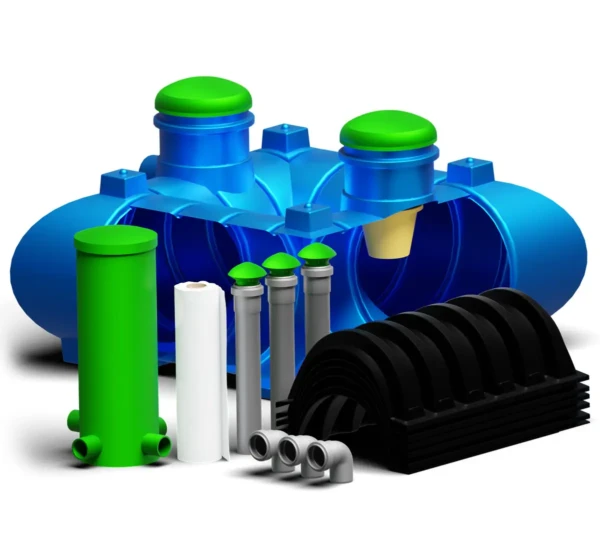
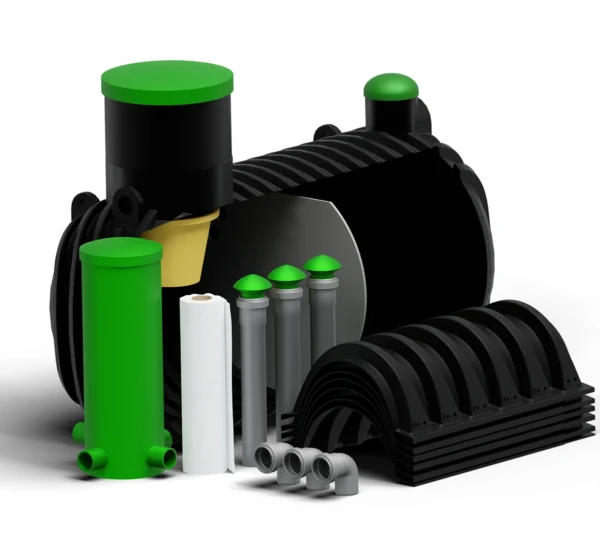
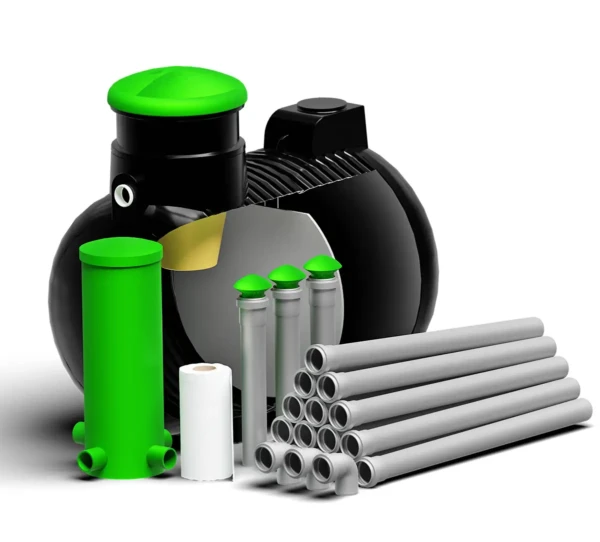
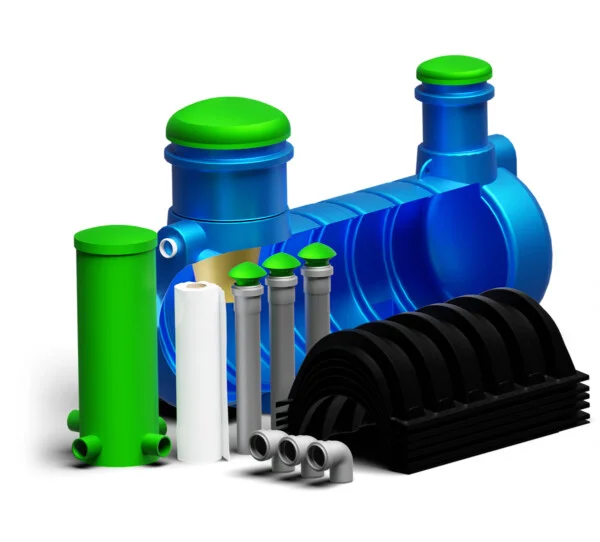
More and more single-family homeowners are choosing ecological treatment plants, a modern and safe way to dispose of wastewater. This is a convenient, economical, and environmentally friendly solution, especially in areas where connection to the sewer system is not possible.
If you are planning to build a house or modernize an existing installation, it is worth learning about the operating principles of an ecological sewage treatment plant and its greatest advantages.
What is an ecological sewage treatment plant?
An ecological treatment plant, often called a domestic sewage treatment plant, is a system that naturally and mechanically purifies domestic wastewater. This process occurs without the use of harmful chemicals and without negative impact on the environment.
The treatment plant is installed on the property – right next to the building – and connected to the house’s sewer system. This allows wastewater to be treated on-site rather than being transported away as is the case with a septic tank.
How does an ecological sewage treatment plant work?
The operation of the ecological sewage treatment plant takes place in several stages:
1. Preliminary treatment (septic tank)
The first chamber receives wastewater from the home. This is where solids are separated from liquids, and anaerobic digestion occurs.
2. Biological treatment
Aerobic and anaerobic bacteria break down organic pollutants. This is a key process that makes wastewater largely environmentally neutral.
3. Drainage, bed or biological reactor
Purified water can go to:
- for seepage drainage,
- for infiltration tunnels,
- on the biological deposit,
- or to a modern bioreactor.
It all depends on the type of treatment plant.
4. Discharge of purified water
Woda po procesie trafia do gruntu lub do rowu melioracyjnego – w pełni zgodnie z przepisami.
Types of ecological sewage treatment plants
There are several types of home sewage treatment plants available on the market:
Drainage treatment plants
The simplest and cheapest. They require a larger plot of land.
Biological sewage treatment plants
More advanced, effective, and efficient. They take up little space and operate regardless of soil conditions.
Hybrid treatment plants
They combine the advantages of mechanical and biological treatment.
The choice depends on the size of the plot, the type of land, the number of household members and the budget.
Advantages of an ecological sewage treatment plant
1. Low operating costs
Compared to a traditional septic tank, operating costs are even several times lower.
2. Convenience and maintenance-free
The treatment plant only requires periodic inspections and removal of sludge every few months.
3. Ecology
The purification process takes place naturally, without chemicals and without the risk of soil contamination.
4. Long service life
A well-built sewage treatment plant can last up to 20–30 years.
5. No unpleasant odor
A properly functioning installation is tight and odorless.
Is an ecological sewage treatment plant profitable?
Absolutely. Although the installation costs are higher than a standard septic tank, the investment pays off quickly – often in just 2-3 years. Furthermore, an ecological treatment plant increases the value of the property and allows for complete independence from sewage disposal companies.
What should you pay attention to when choosing a sewage treatment plant?
- plot size
- type of soil (permeable or clayey)
- number of inhabitants
- access to power
- water and ground conditions
- local regulations and required notifications
It is worth consulting a company that will select a system that will suit the conditions of a specific plot.
Summary
An ecological sewage treatment plant is a modern, economical, and completely environmentally friendly solution. It allows you to reduce costs, eliminate dependence on a traditional septic tank, and ensure long-term convenience.
This investment is particularly effective on plots without access to a sewage system – and is one of the best methods of managing domestic sewage in a single-family home.